Impartialism
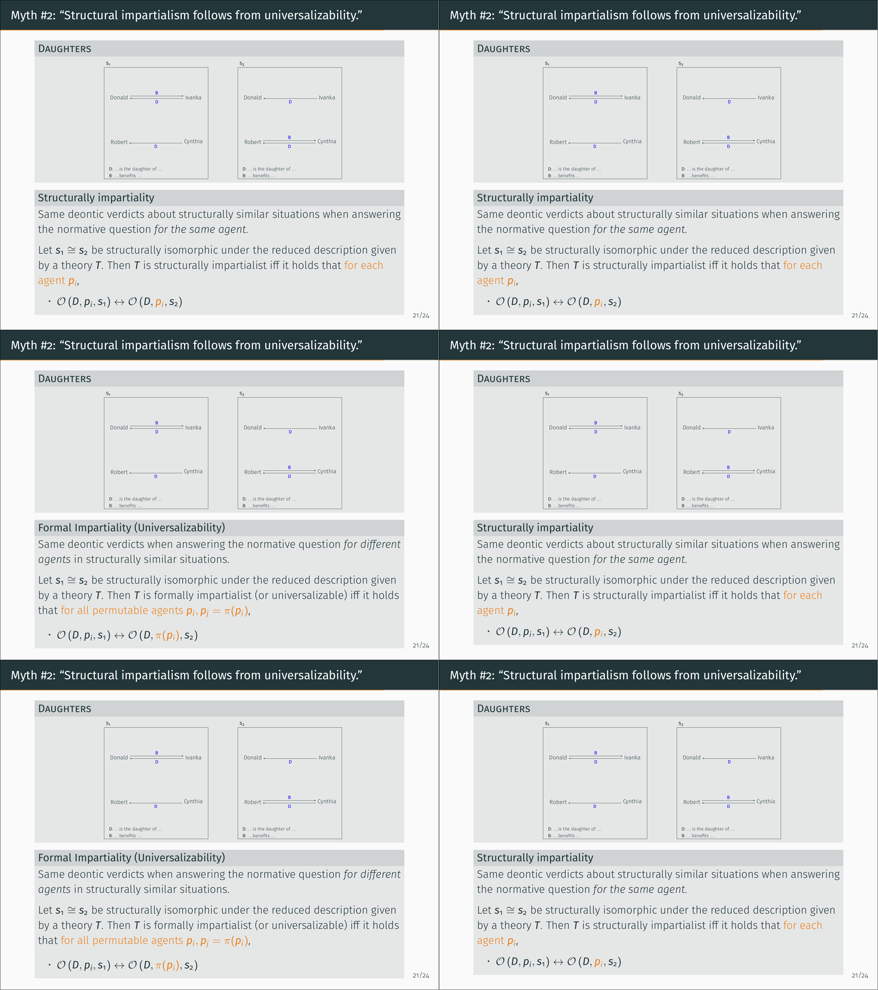
Our ethical thinking vacillates between emphasizing impartiality (“The good of every person counts equally.”) and a strong actor-centeredness (“It makes a difference whether I do something or whether I make sure that someone else does it.”). Does who is who count morally?
Within the framework of a formal model of practical deliberation, the project investigates how different types of impartiality can be distinguished and what role they play in moral theorizing. Within the model, different varieties of (im)partiality can be spelled out by certain forms of (in-)variance of deontic judgments under isomorphism between relational structures (such as graphs) that represent moral situations. This opens up a scope for differentiation for “non-partisan” approaches in which the number of persons, but not the identity of the persons, is morally relevant and which can nevertheless avoid certain (morally problematic) forms of aggregation (as in utilitarianism).

Christian Seidel
Professor
Publications

Events